
 10 views
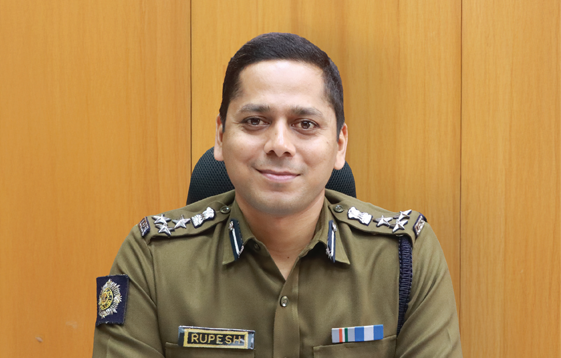
The Kolkata PROTECTOR 23 Sir, as Joint Commissioner of Police (Crime), you oversee a vast and complex crime landscape.
How would you describe the core philosophy guiding your work?
At the heart of our approach is zero tolerance against crime. This is not merely a slogan; it is a working principle that translates into constant vigilance, strong preventive action, swift detection, and sustained follow-through till conviction. Crime control today is no longer reactive alone; it has to be predictive, technology-driven, and people-centric. Prevention seems to be a recurring theme in Kolkata Police’s strategy.
Could you elaborate on this?
Prevention forms the backbone of our crime-control efforts. We focus extensively on preventing both conventional and non-conventional crimes. Conventional crimes include
offences against property and individuals, such as dacoity, robbery, burglary, snatching, motor vehicle theft, and crimes against women. To address these, we have specialised units like Anti-Dacoity, Anti-Robbery, Anti-Burglary, Anti-Snatching, and the Motor Theft Section (MTS). Each of these units carries out intensive area domination, night patrolling, surprise checks, and surveillance of vulnerable zones. Public spaces such as bus terminals, railway stations, markets, and high-footfall zones receive particular attention. During festive seasons, especially Durga Puja, when Kolkata witnesses an unprecedented influx of people, these efforts are significantly intensified. Our extensive CCTV surveillance network, integrated with real-time monitoring, plays a crucial role in crowd management and crime deterrence during this period.
What about narcotics and organised crime networks?
We have a dedicated Narcotics Section that focuses on both prevention and detection. Drug trafficking today is closely linked with organised crime, financial fraud, and even cyber-enabled offences. Our teams work on intelligence-led operations, inter-agency coordination, and targeted enforcement to dismantle these networks rather than merely arresting end-level offenders.
White-collar crime and cybercrime are growing challenges across the country. How is Kolkata Police tackling these criminal activities?
These crimes require specialised skill sets. We have dedicated units dealing with cheating, fraud, bank fraud, document forgery, and complex financial offences, supported by a Special Investigation Team (SIT) wherever required.Our Cyber Crime Wing operates on two fronts — prevention and detection. Prevention is critical because cybercrime often exploits lack of awareness. We conduct regular awareness programmes in schools, colleges, housing complexes, and public spaces. One of our most impactfulinitiatives is a modified cyber awareness bus, which travels to crowded areas and educational institutions, engaging citizens directly and explaining common cyber frauds in simple language.
Detection alone is not enough unless it leads to conviction. How do you ensure that cases reach logical closure?
Detection is only one part of the process. Once a serious complaint is received, we assess its gravity and either take it up directly or assist police stations in investigation. What sets our approach apart is trial monitoring. After charge sheets are filed, we continue to track the progress of trials, ensuring procedural compliance and timely prosecution. This significantly improves conviction rates. We give special attention to crimes against women and POCSO cases. In one notable POCSO case registered at Burtolla Police Station, coordinated investigation and focused trial monitoring led to capital punishment being awarded within a short timeframe. There are several other
cases, both conventional and cyber-related, where swift convictions have reinforced public faith in the justice system.
Cyber fraud victims often feel helpless. Has Kolkata Police been able to provide tangible relief?
Yes, and this is an area where measurable outcomes matter. In cases involving smaller fraud amounts, we actively pursue recovery of defrauded money through banking channels and inter-agency coordination. Last year, our recovery rate stood at around 15 per cent. This year, it has already crossed 20 per cent, which is a significant improvement.We have also uncovered sophisticated cybercrime networks involving Indian and foreign nationals. A critical enabler of such crimes is the misuse of pre-activated SIM cards, often sourced through unethical Point-of-Sale (POS) distributors.
We registered FIRs against such POS operators, arrested those involved, and seized a large number of pre-activated SIM cards. This strike at the supply chain has had a deterrent effect.Durga Puja poses unique policing challenges. How does the Crime Department contribute during this period?
Durga Puja is not just a festival; it is a massive public event. We divide the city into sectors, deploy dedicated teams for preventive policing, and coordinate closely with local police stations. One recurring concern during Puja is missing children, especially in crowded pandal areas. Our Missing Persons Unit works round the clock during this period, and many children are successfully traced and reunited with their families within hours. This year, we also set up cybercrime awareness stalls near major pandals, recognising that large crowds are vulnerable to digital frauds as well.
Finally, what message would you like to convey to citizens?
Policing works best when it is participative. Our commitment is unwavering—to protect life, liberty, and dignity. But public awareness, cooperation, and trust are equally
important. Whether it is reporting suspicious activity, practising cyber hygiene, or supporting lawful processes, citizens play a vital role.Kolkata Police remains steadfast
in its mission: to ensure safety without fear, justice without delay, and security with compassion.
WE GIVE SPECIAL ATTENTION TO CRIMES AGAINST WOMEN AND POCSO CASES. IN ONE NOTABLE POCSO CASE REGISTERED AT BURTOLLA POLICE STATION


