
 12 views
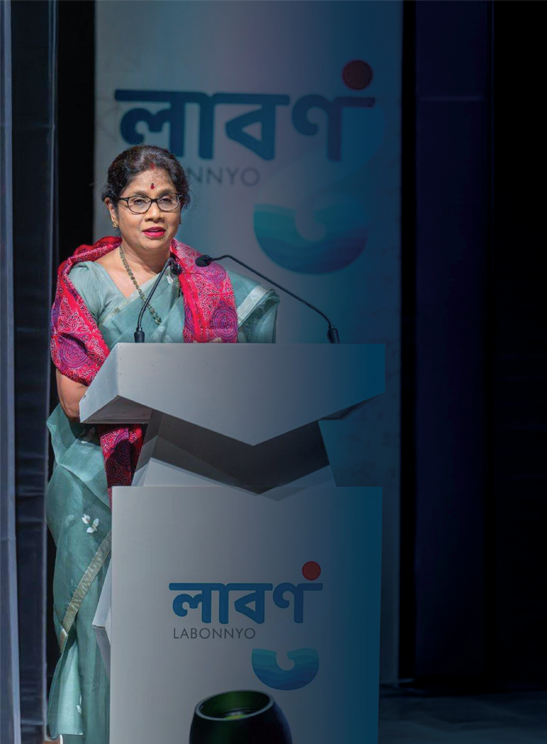
Dr. Shashi Panja is a senior Cabinet Minister in the Government of West Bengal, overseeing Industries, Commerce & Enterprises, and Women and Child Development and Social Welfare. A trained medical doctor, she has been active in community health and welfare, serving as the Member of the West Bengal Legislative Assembly for Shyampukur. Since 2013, she has taken on key social welfare roles and, in 2022, expanded her leadership to industrial and commercial sectors. Under her guidance, initiatives like Lakshmir Bhandar, a universal cash-support scheme for women aged 25-60, have significantly increased, promoting financial inclusion and socio-economic security for millions. In an interview with Satya Gopal Dey, Guest Editor, The Kolkata PROTECTOR, she discusses her department's work.
Q: As Cabinet Minister for Women and Child Development and Social Welfare, how do you assess Lakshmir Bhandar, the cash-transfer programme? In your view, can such schemes meaningfully address poverty?
A: Before answering that, let me pose a question in return: Should Lakshmir Bhandar be looked upon only as a form of financial assistance? Cash-transfer programmes such as Lakshmir Bhandar are widely recognised as effective instruments for women's empowerment, particularly in advancing financial inclusion and providing a degree of income security. However, the Scheme should not be viewed only as a poverty-alleviation measure. The programme needs to be understood in the broader context of gender equity and social inclusion. It acknowledges women's economic contributions, including unpaid work within households and caregiving roles, which often remain unrecognised in formal economic systems.
Q: That is an interesting perspective. Could you elaborate on the Scheme's scope and reach?
A: Lakshmir Bhandar was launched in August 2021. The scheme provides monthly income support to women residents of West Bengal between the ages of 25 and 60, excluding government employees. It has been designed to ensure a basic level of financial stability for women across socio-economic categories, with coverage extending to both rural and urban areas of the State.
Q: Another flagship initiative frequently associated with women's empowerment in West Bengal is Kanyashree. How do you assess its contribution?
A: Kanyashree has emerged as one of the State's most impactful interventions for adolescent girls and young women. Launched in 2013 by our Hon'ble Chief Minister, the Scheme has since supported over 89 lakh beneficiaries across West Bengal. Its effectiveness has also been recognised internationally, including through the United Nations Public Service Award. In the financial year 2024-25 alone, approximately 15.75 lakh girls are expected to receive the annual scholarship of Rs 1,000, while around 2.01 lakh girls will benefit from the one-time grant of Rs 25,000. A total budgetary allocation of Rs 593.51 crore has been earmarked for the Scheme during the year. Beyond financial assistance, Kanyashree functions as a social development programme, encouraging girls to remain in education, delay early marriage, and become informed participants in their communities. Many beneficiaries have played an active role in raising awareness against child marriage and trafficking, contributing to broader child-protection efforts.
Q: The Scheme also appears to have evolved beyond direct transfers. Could you comment on that aspect?
A: Kanyashree has expanded into what may be described as a "cash-plus" model. Beneficiaries have established more than 8,500 Kanyashree Clubs in secondary and higher secondary schools across the State. These platforms encourage leadership, civic awareness and peer-to-peer learning. Through structured monthly activities, the Clubs promote life skills, social responsibility and awareness of rights and opportunities. This participatory approach helps ensure that financial support is complemented by capacity-building and confidence-building, enabling girls to make informed choices about their education and future.
Q: Share with us about Rupashree, another important cash-transfer scheme under your Department.
A: The Rupashree scheme was designed to address the financial pressures faced by economically weaker families at the time of their daughters' marriage. In many cases, families resort to borrowing at high interest rates to meet wedding-related expenses, which can lead to long-term financial distress. A key feature of the Scheme is its clear linkage to legal age norms. Financial assistance is provided only when the woman is 21 years or above at the time of marriage, reinforcing the State's commitment to discouraging child marriage while supporting women's rights and well-being. In the financial year 2024-25, approximately 2.08 lakh women have benefited under Rupashree, with a total allocation of Rs 504.25 crore. The scheme thus combines social messaging with practical economic support.
Q: Could you share details about other social security schemes under your Department. How do you ensure an inclusive approach?
A: Our Hon'ble Chief Minister, Mamata Banerjee, has always prioritised social security for the most vulnerable. It remains a central pillar of our Department's work, particularly for vulnerable groups. In the financial year 2024-25, the Old Age Allowance Scheme has supported 31.27 lakh senior citizens, with an expenditure of Rs 2,622.17 crore. Similarly, the Widow's Allowance Scheme has reached 20.72 lakh beneficiaries, with a financial outlay of Rs 1,795.77 crore. For persons with disabilities, the Manabik Pension Scheme provides support to individuals with 40 per cent or more disability. During the same financial year, 7.66 lakh beneficiaries received assistance amounting to Rs 668.48 crore. An important administrative initiative supporting these schemes is Duare Sarkar, launched on 1st December 2020. Through camps organised at Gram Panchayat and Municipal Ward levels, citizens are able to apply for welfare schemes, submit documents, and resolve service-related issues closer to home. This outreach mechanism has reduced procedural barriers and improved access, particularly for those who may find it difficult to navigate formal offices. Overall, the emphasis is on coverage, accessibility and dignity. These programmes aim to provide financial assistance and also ensure that eligible citizens can access their entitlements in a timely and respectful manner.
Q: Could you highlight the key programmes for children under your Department?
A: I did expect this question from you, given your decades-long commitment to child rights and protection, not only in West Bengal but across India. Child welfare is a priority area for the Government of West Bengal, and our institutional framework reflects that focus. The State has established two dedicated directorates for children - the Directorate of Child Rights and Trafficking, and the Directorate of Integrated Child Development Services (ICDS). Earlier, child-related matters were managed within a single social welfare structure. The creation of specialised directorates has enabled more focused planning, implementation and monitoring of child-centric programmes. Alongside these, the Directorate of Social Welfare continues to oversee schemes primarily aimed at adults. This administrative separation allows for clearer accountability and a more targeted approach to addressing the rights, protection and developmental needs of children.
Q: Could you elaborate more on the Government's programmes for children, particularly through Anganwadi services?
A: The Anganwadi Services Scheme remains one of the most extensive platforms for early childhood care and development in West Bengal. In the financial year 2024-25, around 68.58 lakh children below six years of age and 11.26 lakh pregnant and lactating women received cooked hot meals for 25 days each month through Anganwadi centres. From a nutritional perspective, the State has recorded progress, with 3.34 per cent of children under five identified as underweight, compared to 3.98 per cent in the previous year. In terms of early learning, 66,126 'Shishu Alay' centres are currently operational, providing early childhood care and education to approximately 36.45 lakh children aged three to six years. The Department has also strengthened early identification and inclusion of children with developmental conditions. A large-scale screening exercise covering 49.40 lakh children led to the identification of 5,942 children showing indicators of Autism Spectrum Disorder. Of these, 869 children were formally diagnosed, while 2,194 children were identified with conditions such as cerebral palsy, Down syndrome and intellectual disabilities. To support quality service delivery, significant investments have been made in training and infrastructure. Over 1,05,575 Anganwadi workers have been trained using customised learning modules. LPG cooking fuel is being introduced in 81,321 Anganwadi centres, with an expenditure of Rs 37.81 crore to date. Women's self-help groups and collectives now supply essential food items such as pulses, mustard oil and iodised salt, strengthening local participation. In addition, the distribution of more than 1.17 lakh infantometers, over 97,000 stadiometers, and 91,000 baby weighing scales has enhanced growth monitoring and health assessment. West Bengal has also introduced a structured curriculum framework for pre-primary education, strengthening the educational foundation delivered through Anganwadi centres. Overall, Anganwadi centres function not only as nutrition points but as integrated spaces for health, learning and inclusion, supporting the holistic development of young children across the State.
Q: Madam, could you explain the State's approach to child protection, particularly in the context of Mission Vatsalya. How is West Bengal working to safeguard vulnerable children?
A: Mission Vatsalya, earlier known as the Integrated Child Protection Scheme (ICPS), is the principal framework for implementing the Juvenile Justice (Care and Protection of Children) Act. It focuses on preventing abuse, neglect and exploitation, while ensuring care, protection and rehabilitation for children in difficult circumstances. The Scheme operates on a shared funding model between the State and the Centre. While central allocations have remained limited over time, West Bengal has continued to strengthen its child protection systems within these constraints. At the institutional level, the State has 23 District Child Protection Units and 25 Child Welfare Committees functioning across districts. In addition, Child Protection Committees operate at village, ward and municipal levels, creating a decentralised, community-based safety network. The State Adoption Resource Agency oversees adoption processes, while Sponsorship and Foster Care Approval Committees support non-institutional care arrangements for children who cannot remain with their biological families.
Q: What arrangements are in place for children residing in care institutions?
A: The State currently runs 19 government child care institutions and 10 government-run adoption agencies, while also working closely with 60 NGO-run child care institutions and 22 specialised adoption agencies. These facilities provide children with access to nutrition, healthcare, education and vocational training. To strengthen participation and accountability, Children's Committees have been constituted in all institutions, allowing children to voice concerns and engage with management. During the current year, particular emphasis has been placed on life-skills development. Under the Bhalo Rakha, Bhalo Thaka initiative, children in all 19 government institutions participated in activities such as dance, theatre and art. In addition, partnerships have supported vocational exposure, including beautician training for adolescent girls and skill-based programmes in hospitality, electrical work and healthcare. At all times, the Department follows the principle that institutional care is a measure of last resort.
Q: Could you briefly outline your Department's work on adoption and foster care?
A: Adoption remains a critical pathway for the long-term rehabilitation of children who are unable to return to their families. West Bengal has 32 specialised adoption agencies, of which 22 are NGO-run and 10 are government-run, handling both domestic and inter-country adoptions. Between April and November 2024, 169 children were adopted within India, while 20 children were placed through inter-country adoption. We are also addressing the situation of older children who remain in institutions for extended periods. In line with Supreme Court directions, children with no family contact are being identified and prepared for adoption. Currently, 172 children fall under the 'no visitation' category and 54 children under 'unfit guardians'. The Sponsorship Scheme provides Rs 4,000 per month to support children in vulnerable situations. During 2024-25 (April to October), 1,391 sponsorships were approved, including 323 for children orphaned due to COVID-19. Foster care placements are also being encouraged, particularly for older children, with 10 children placed in foster families so far.
Q: Capacity-building must be essential in such sensitive work. What steps has your Department taken in this regard?
A: Training and capacity-building are central to effective child protection. Recently, superintendents of Child Care Institutions were trained on legal provisions, rehabilitation processes and digital case management. More than 160 POCSO support workers have also received district-level training. We have partnered with organisations such as Enfold Proactive Health Trust to develop 20 master trainers, and with NIPCCD, New Delhi, to train 50 Child Helpline personnel. Capacity-building efforts extend beyond the department to include police officers, judicial officers and public prosecutors. For instance, cadet sub-inspectors at the Police Training Academy in Howrah underwent training on child rights and child protection systems, including exposure visits to Child Welfare Committees (CWCs). The objective is to ensure that all stakeholders involved in child protection respond with competence, sensitivity and legal clarity.
Q: Could you highlight the State's efforts in rescue, repatriation and trafficking prevention?
A: West Bengal's Task Force for Combating Human Trafficking has remained actively engaged in prevention, rescue and rehabilitation. During 2024-25, the State facilitated the rescue of approximately 9,500 individuals, including children and adults in vulnerable situations. In the same period, 53 Bangladeshi children and six Nepali children were repatriated through coordinated inter-governmental and inter-agency processes. We have strengthened standard operating procedures for Child Welfare Committees and Juvenile Justice Boards, particularly with regard to rehabilitation planning and victim support. In collaboration with Kolkata Police, the State has also acted against organised trafficking networks, including the dismantling of an inter-State trafficking and illegal adoption racket, which led to the rescue of a newborn. Preventive work extends to the grassroots level, where child protection concerns are integrated into Gram Panchayat development planning, reinforcing early identification and community vigilance.
Q: What are the key services available for women in distress in West Bengal?
A: The State currently operates 37 Shakti Sadans, which provide shelter, food, counselling and medical support to women facing difficult circumstances. In 2024-25, of the 758 residents supported through these facilities, 366 women received vocational training aimed at improving employability and long-term independence. During the same period, 19 women and five children were reunited with their families in other States, following appropriate assessment and coordination.
Q: What role do One Stop Centres play in this ecosystem?
A: Twenty-three One Stop Centres are operational across districts in West Bengal. These centres provide immediate access to legal aid, medical assistance, police facilitation, counselling and temporary shelter for survivors of violence. While they are fully funded by the Government of India, implementation and management are undertaken by the State to ensure local responsiveness and coordination.
Q: What legal protections are in place for women and other vulnerable groups?
A: The Department ensures the implementation of the Protection of Women from Domestic Violence Act and the Sexual Harassment of Women at the Workplace (Prevention, Prohibition and Redressal) Act through local and internal complaints committees across districts. In addition, senior citizens are supported under the Maintenance and Welfare of Parents and Senior Citizens Rules, 2008, through district-level tribunals that address grievances and ensure access to entitlements.
Q: Could you also speak about measures for transgender persons?
A: West Bengal has enacted the West Bengal Transgender Rules, 2022, in alignment with national legislation. To date, 1,188 transgender identity cards have been issued, enabling access to welfare schemes and public services. Inclusion and legal recognition remain integral to our social welfare framework.
Q: The Kolkata PROTECTOR, as the official magazine of Kolkata Police, is widely read across departments and among senior professionals. The police fraternity would value your reflections on the work of the Force.
A: My association with Kolkata Police has primarily been through community-oriented initiatives, especially those undertaken by the Community Policing Wing (CPW). These efforts are carried out in close collaboration with committed civil society organisations such as Vikramshila Education Resource Society, Parivar, Maya Foundation, and WIF, and together they have created meaningful platforms of support for children from vulnerable backgrounds. I am invited each year to the annual sports meet organised for these children, a thoughtfully planned event held at the Body Guard Lines, which I always find deeply heartening. It reflects the human, compassionate dimension of policing that often goes unseen, yet makes a lasting difference on the ground. Programmes such as Nabadisha, which supports education, guidance and rehabilitation for children from vulnerable backgrounds, demonstrate the value of collaboration between the police, civil society organisations and government departments. Beyond this, Kolkata Police undertakes a range of preventive and outreach activities, including anti-drug awareness campaigns, self-defence training for women, and blood donation drives, which contribute to broader community welfare.
Q: Would you like to add anything further about Kolkata Police?
A: Over the years, efforts have been made to modernise policing and strengthen child-sensitive responses across West Bengal. Units such as the Anti-Human Trafficking Unit (AHTU) work closely with the Directorate of Child Rights and Trafficking to ensure coordinated rescue and rehabilitation of victims. I am also proud that UNICEF's 'State of the World's Children' report highlighted Kolkata Police as a genuinely child-friendly police force a few years ago, which is a remarkable acknowledgment of their compassion and professionalism. Capacity-building has been a sustained focus. As part of implementing the Juvenile Justice (Care and Protection of Children) Act, the Department has conducted training programmes for police personnel across districts, covering child rights, legal procedures and best practices. For instance, in 2022, district-level training sessions were organised to improve institutional responses to children in need of care and protection. Such inter-departmental collaboration is essential for building systems that are responsive, accountable and centred on the rights and dignity of vulnerable individuals.
Q: You have been generous in discussing policy and governance. Before we conclude, our readers would appreciate a brief glimpse into your personal journey, and how you balance public life with personal commitments.
A: My journey began far from politics. I was born into a Telugu family from Tenali in Andhra Pradesh. My father, Pillalamari T. Krishnaiyya, was the Chief Industrial Engineer at Hindustan Motors, and our family later settled in Hindmotor, where I spent much of my childhood. I pursued medicine at R.G. Kar Medical College and Hospital, Kolkata, and later specialised in ultrasonography and infertility care, practising across hospitals and nursing homes. Those years in medicine shaped my understanding of service, responsibility and empathy. My entry into public life happened gradually. Through my marriage, I became connected to a political legacy, my late father-in-law, Ajit Panja, was involved in public life and was among those who responded to the call of Mamata Banerjee during the formative years of the Trinamool Congress. Observing that work from close quarters gave me insight into grassroots politics and public engagement. Over time, responsibilities were entrusted to me, and I learned through experience and guidance. I see myself as someone who has grown into public service through opportunity, mentorship and accountability. On the personal front, I am married to Dr Prasun Kumar Panja, a practising dermatologist, and we have two daughters. My elder daughter, Puja Panja, has entered public life and currently serves as a Councillor of the Kolkata Municipal Corporation (Ward No. 8), while my younger daughter, Namrata, is pursuing her higher education. Balancing family life with public responsibilities is always a challenge. Public service often extends beyond fixed hours, as accessibility to people is an essential part of the role. Within our family, we manage this through mutual understanding and respect for each other's priorities. That shared understanding makes it possible to sustain both personal commitments and public responsibilities.
Q: Any final thoughts you would like to share?
A: Having lived and worked in West Bengal for many years, I feel deeply connected to the State and its people. I am reminded of Rabindranath Tagore's words: "Sesh nahi je sesh katha ke bolbe", which suggests that there can never be a final word, because the work itself continues. What we have discussed today reflects only a part of the broader efforts underway. Governance is an evolving process, and our focus remains on strengthening systems, expanding access, and ensuring that development reaches those who need it most.


